

1. Conducting Comprehensive Financial Diagnostics
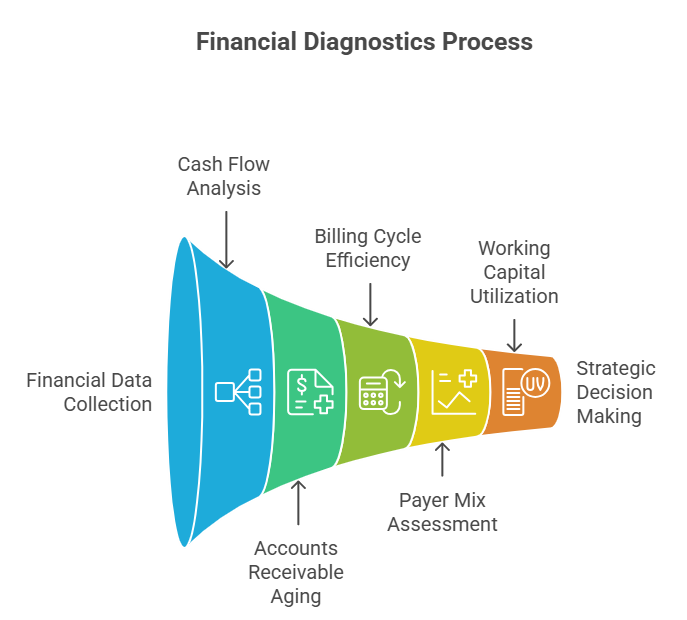
Conducting comprehensive financial diagnostics is the first and most critical step a Business Turnaround Specialist takes to help Medical Care organizations address cash flow challenges. Before implementing solutions, it is essential to develop a clear and accurate understanding of the organization’s financial position. It begins by performing a detailed cash flow analysis to identify both short-term liquidity pressures and long-term funding gaps.
They closely examine accounts receivable aging, with particular attention to insurance reimbursements, Medicare, and Medicaid payments, which often represent significant revenue streams. In addition, evaluating billing cycle efficiency and analyzing claim denial rates to identify delays or revenue leakages within the revenue cycle.
They also assess the organization’s payer mix and reimbursement trends to understand how different payment sources affect financial stability. Beyond revenue analysis, they also review working capital utilization and evaluate vendor payment cycles and outstanding obligations to determine whether resources are being managed efficiently.
Identify hidden operational inefficiencies that may be quietly affecting financial performance. In many Senior Care Services settings, cash flow issues rarely stem from a single problem; instead, they arise from multiple interconnected challenges such as delayed reimbursements, inefficient billing systems, increasing staffing costs, and inadequate expense controls. By consolidating financial data across departments and presenting a transparent financial picture, the advisors equip leadership with the insights needed to make faster, more strategic decisions.
2. Developing a 13-Week Cash Flow Forecast
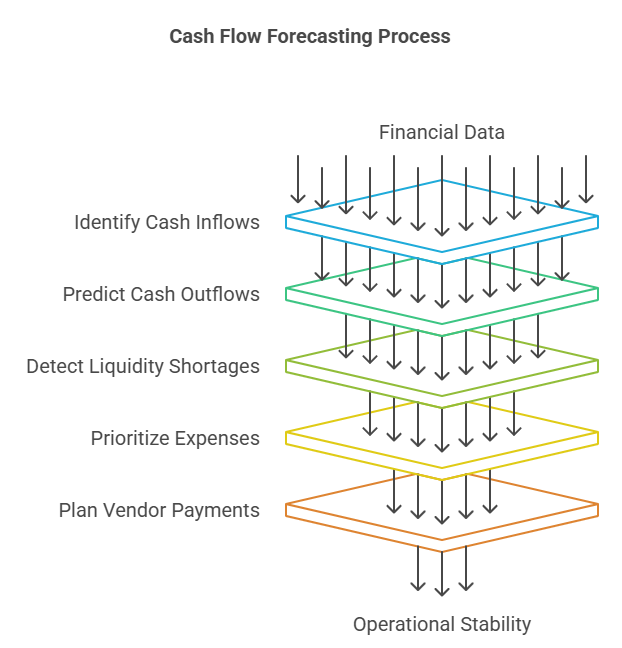
Developing a 13-week cash flow forecast is one of the most effective tools a Financial Recovery Specialists uses to stabilize the financial position of organizations. This short-term financial roadmap provides management with a clear view of expected cash inflows and outflows, enabling leaders to make proactive and informed decisions.
A rolling 13-week forecast that identifies potential liquidity shortages well in advance, allowing the organization to prepare for funding gaps before they become critical. The forecast also helps prioritize essential operational expenses, ensuring that the most important obligations—such as payroll, medical supplies, and patient care services—are consistently funded.
It also enables Care Management to plan vendor payments more strategically while maintaining strong relationships with suppliers. By carefully evaluating the timing of incoming receivables, including insurance reimbursements and other payments, the forecast improves visibility into when cash will actually be available.
This level of clarity is particularly important in senior living environments, where financial disruptions can directly impact patient care, employee morale, and regulatory compliance. Business Transformation Experts typically update the forecast on a weekly basis, transforming it into a dynamic management tool rather than a static report. Continuous monitoring of cash movements and adjusting projections helps leadership anticipate financial stress early, respond quickly to changing conditions, and maintain operational stability during periods of financial uncertainty.
3. Improving Revenue Cycle Management
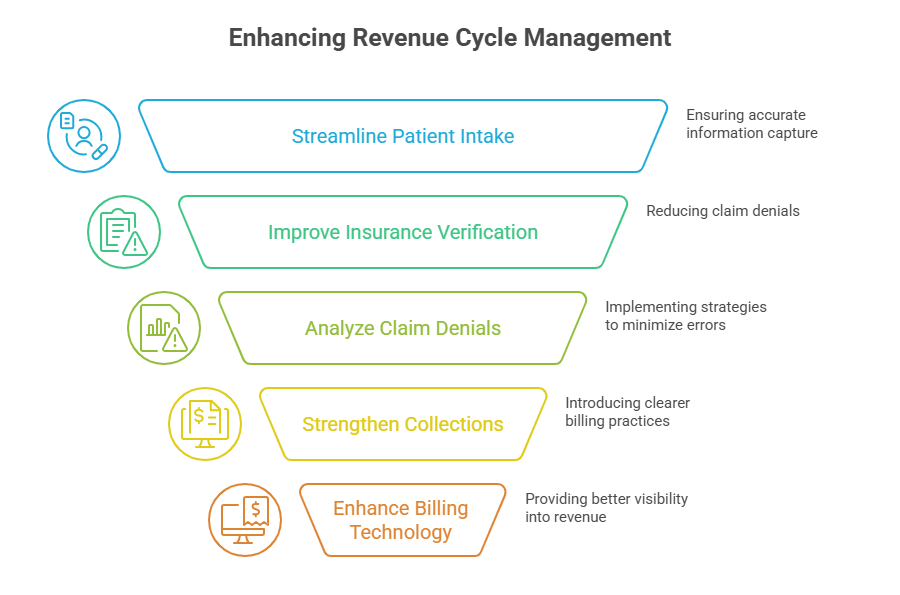
Improving revenue cycle management is one of the most effective ways a S.K.I.L.L. Consultants restructuring team can help these organizations strengthen cash flow. Revenue cycle inefficiencies are a common cause of financial pressure, often resulting in delayed payments, claim denials, and extended collection periods. By reviewing patient intake and documentation processes to ensure that accurate information is captured at the start of care.
They also work to improve insurance verification procedures, reducing the likelihood of rejected claims and reimbursement delays. By analyzing claim denial patterns, it identifies root causes and implements strategies to minimize errors and accelerate claims submission timelines.
Turnaround Management Team helps strengthen collections from private-pay residents and patients by introducing clearer billing practices and more structured follow-up processes.
Many organizations also benefit from improved billing technology and enhanced reporting systems that provide better visibility into the revenue cycle.
In Senior Care Services, improving billing accuracy and collection efficiency can significantly reduce the time between service delivery and payment. As a result, stronger revenue cycle management accelerates cash conversion and turns outstanding receivables into usable cash more quickly.
4. Optimizing Working Capital Management
Effective working capital management is essential for Medical Ecosystem to maintain sufficient liquidity and support daily operations without disruption.
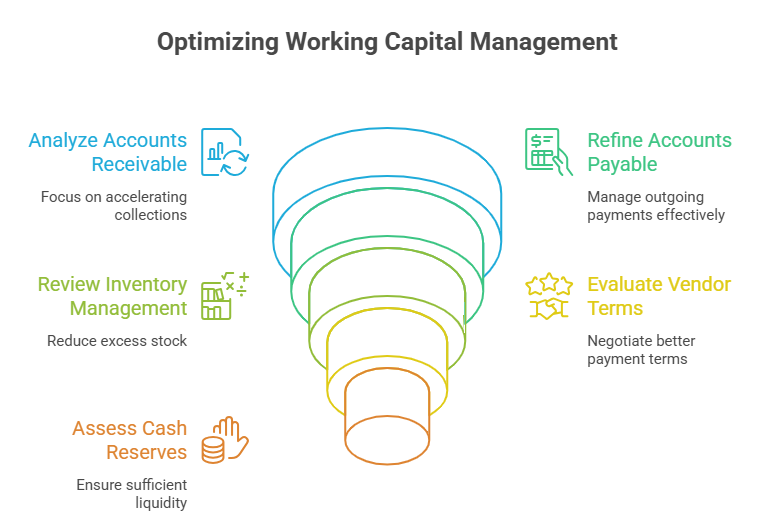
Evaluating and optimizing the organization’s working capital structure to improve financial flexibility. This process includes analyzing accounts receivable to accelerate collections, refining accounts payable strategies to better manage outgoing payments, and reviewing inventory management practices to reduce excess stock.
Evaluating vendor payment terms and assessing the adequacy of cash reserves to ensure the organization can meet short-term obligations.
They also, negotiate extended payment terms with vendors, secure bulk purchasing discounts, or supply chain contracts to create more favorable cost structures.
They may also identify opportunities to reduce unnecessary inventory holding costs, particularly in medical supplies and facility operations where overstocking can tie up valuable capital.
By making these targeted adjustments, they unlock significant short-term cash and improve liquidity while ensuring that essential patient care services and operational standards remain fully supported.
5. Cost Structure Optimization
Cost structure optimization is a critical step in improving the financial stability, which often face rising expenses in areas such as labor, medical supplies, utilities, and facility maintenance.
Corporate Restructuring Advisors identifies strategic opportunities to control these costs while maintaining high standards of patient care. This may include improving workforce scheduling to reduce overtime, renegotiating supplier contracts, outsourcing non-core services, implementing technology-driven efficiencies, and eliminating redundant administrative functions.
The objective is not simply to cut costs but to align expenses with operational efficiency and care quality. For instance, data-driven staffing optimization can lower labor costs while maintaining appropriate patient-to-staff ratios.
6. Negotiating with Lenders and Creditors
Negotiating with lenders and creditors is a critical role a Crisis Management Consultants plays when Clinical Care face mounting cash flow pressures and struggle to meet debt or vendor obligations.
Acting as an experienced intermediary, the team works directly with financial stakeholders to develop practical solutions that stabilize the organization’s financial position.
These negotiations may involve loan restructuring, payment deferrals, covenant waivers, debt refinancing, interest rate adjustments, or extended repayment schedules designed to ease short-term financial strain.
Lenders and creditors are often more willing to cooperate when they see that the organization is taking proactive and structured steps toward recovery.
The team also prepares detailed financial analyses and forecasts to demonstrate the organization’s path to improved stability, which strengthens credibility during negotiations. By securing more flexible financial arrangements, they can quickly reduce immediate pressure on cash flow and provide leadership with the breathing room needed to implement operational improvements and long-term financial strategies
7. Identifying Alternative Financing Options
Identifying alternative financing options is an important step when healthcare organizations require additional liquidity to stabilize operations.
A Business Consultant evaluates and helps secure suitable funding sources such as asset-based lending, bridge financing, equipment financing, real estate refinancing, government care funding programs, and strategic investment partnerships.
Many medical care providers possess valuable assets—including real estate, medical equipment, and accounts receivable—that can be leveraged to unlock new capital.
Structure financing solutions that provide immediate financial support while aligning with the organization’s long-term sustainability goals, ensuring that new funding strengthens operations rather than creating additional financial strain.
8. Strategic Service Line Analysis
Strategic service line analysis helps healthcare and senior living organizations understand which services truly support financial sustainability.
A detailed profitability assessment to evaluate which service lines generate positive margins, which ones consume disproportionate resources, and where operational improvements could enhance performance.
By analyzing revenue, costs, patient demand, and operational efficiency across departments, the team provides leadership with clear insights into the financial impact of each service offered. Based on these findings, organizations may choose to expand high-performing services, streamline underperforming ones, partner with specialized providers, or consolidate certain operations.
This strategic approach ensures that financial and operational resources are directed toward services that deliver the greatest value—both in meeting patient needs and strengthening the organization’s long-term financial stability.
9. Operational Efficiency Improvements
Operational inefficiencies are a common and often overlooked driver of cash flow stress in Wellness Services.
Workflows across key departments, including admissions, clinical operations, facility management, procurement, and administrative functions, to identify bottlenecks and areas for improvement.
By streamlining patient admissions, implementing digital record systems, and reducing administrative delays, organizations can accelerate processes and improve overall efficiency.
Enhancing facility utilization and optimizing scheduling systems for staff and resources further ensures that operations run smoothly while minimizing wasted time and costs.
Even incremental changes can produce significant financial benefits, such as faster revenue collection, reduced overtime, and lower operational expenses.
By addressing these inefficiencies holistically, organizations not only stabilize cash flow but also improve service quality, patient satisfaction, and staff productivity, creating a more resilient and sustainable operational model.
10. Workforce Optimization
Workforce optimization is critical for Medical Ecosystem, where labor costs constitute a major portion of expenses. A Debt Restructuring Advisors helps balance staffing requirements with financial sustainability by analyzing staffing ratios, optimizing shift schedules, reducing unnecessary overtime, and reviewing contract labor utilization.
They also focus on improving employee retention strategies to maintain continuity of care and reduce turnover costs. The goal is not simply to cut headcount but to align staffing resources with patient demand and operational needs.
By creating a more efficient and responsive workforce, organizations can control labor expenses while ensuring high-quality care and smooth operational performance.
11. Enhancing Financial Governance and Reporting
Enhancing financial governance and reporting is essential for Care Management facing financial stress.
S.K.I.L.L. Consultants Strategic Restructuring Consultants robust governance practices, including regular financial reporting dashboards, department-level budgets, and clearly defined key performance indicators (KPIs).
They implement cash flow monitoring systems and executive oversight frameworks to ensure accurate, timely, and actionable financial information. These improvements provide leadership with greater visibility into the organization’s financial health, enabling early identification of emerging issues and informed decision-making.
Standardizing reporting and strengthening accountability helps organizations respond proactively to challenges, maintain operational stability, and build a sustainable foundation for long-term financial performance.
12. Supporting Strategic Turnaround Initiatives
Supporting strategic structuring initiatives is often necessary when Health Management faces complex financial challenges that extend beyond short-term liquidity issues.
An expert team guides leadership through broader initiatives such as facility consolidation, strategic partnerships, asset sales, mergers or acquisitions, and operational restructuring.
By combining financial expertise with operational insights, they ensure that these decisions are both financially sound and aligned with the organization’s mission and patient care priorities.
For senior living operators, consolidating underperforming facilities or forming partnerships with specialized care providers can streamline operations, reduce overhead, and improve service delivery, ultimately enhancing long-term sustainability.
The team also assists in evaluating potential risks, forecasting financial impacts, and coordinating change management to minimize disruption for residents, staff, and stakeholders.
Through careful planning and execution, strategic restructuring initiatives guided by a professional team enable Senior Care Services to stabilize finances, strengthen operational efficiency, and position themselves for sustainable growth and improved patient outcomes.
13. Crisis Management and Stabilization
Crisis management and stabilization are critical when the Healthcare Sector encounters sudden liquidity shortages that threaten operations.
Turnaround Management professionals provide rapid, targeted support to stabilize finances and maintain continuity of care. This often begins with implementing emergency cash management protocols to optimize available funds and ensure critical obligations, such as payroll, utilities, and essential medical supplies, are met without delay.
They may also negotiate urgent vendor agreements and secure short-term financing to bridge immediate cash gaps. In parallel, they develop crisis communication strategies to keep staff, patients, and stakeholders informed, minimizing uncertainty and preserving trust.
By acting quickly and strategically, these professionals help organizations maintain uninterrupted patient services while addressing financial vulnerabilities.
These interventions not only alleviate immediate operational pressures but also establish a foundation for longer-term recovery and stability, enabling these providers to navigate crises with confidence and protect both organizational viability and patient.
14. Long-Term Financial Strategy Development
Long-term financial strategy development is a core function of these experts, enabling these care organizations to move beyond immediate stabilization toward sustainable growth.
They work with leadership to create multi-year financial plans that align revenue projections, expense management, and capital allocation with organizational goals.
Gain advice on capital investment strategies, facility modernization, and technology adoption to improve operational efficiency and patient care quality.
Strategic planning may also involve evaluating service line expansion opportunities and forming partnerships with specialized providers to enhance market position.
By integrating financial foresight with operational insights, the organizations prioritize initiatives that deliver both clinical value and financial returns.
These long-term strategies ensure resources are deployed effectively, risks are mitigated, and the organization is positioned to adapt to evolving assisted living regulations and market dynamics. Ultimately, this approach allows organizations to not only survive challenges but thrive competitively while sustaining high-quality patient care.
15. Preserving Organizational Mission and Patient Care
Preserving organizational mission and patient care is at the heart of any healthcare restructuring effort. For senior living, assisted living, and broader healthcare providers, financial stabilization is not merely about improving balance sheets—it is about ensuring that patients and residents continue to receive high-quality care and that the organization maintains the trust of its community.
Business Transformation Experts brings a deep understanding of the unique sensitivities in these sectors, implementing financial improvements in ways that safeguard clinical outcomes, staff morale, and regulatory compliance.
They carefully balance cost controls and operational efficiencies with initiatives that protect patient and resident satisfaction, recognizing that these elements are inseparable from long-term organizational success.
Aligning financial strategies with the organization’s mission enables care providers to navigate financial challenges without compromising the compassionate, high-quality care that defines their purpose, ultimately ensuring both sustainability and trust within the communities they serve.